
The Pauli Murray Social Justice Teaching Fellowship
2026–2027 Cohort | From Archive to Action
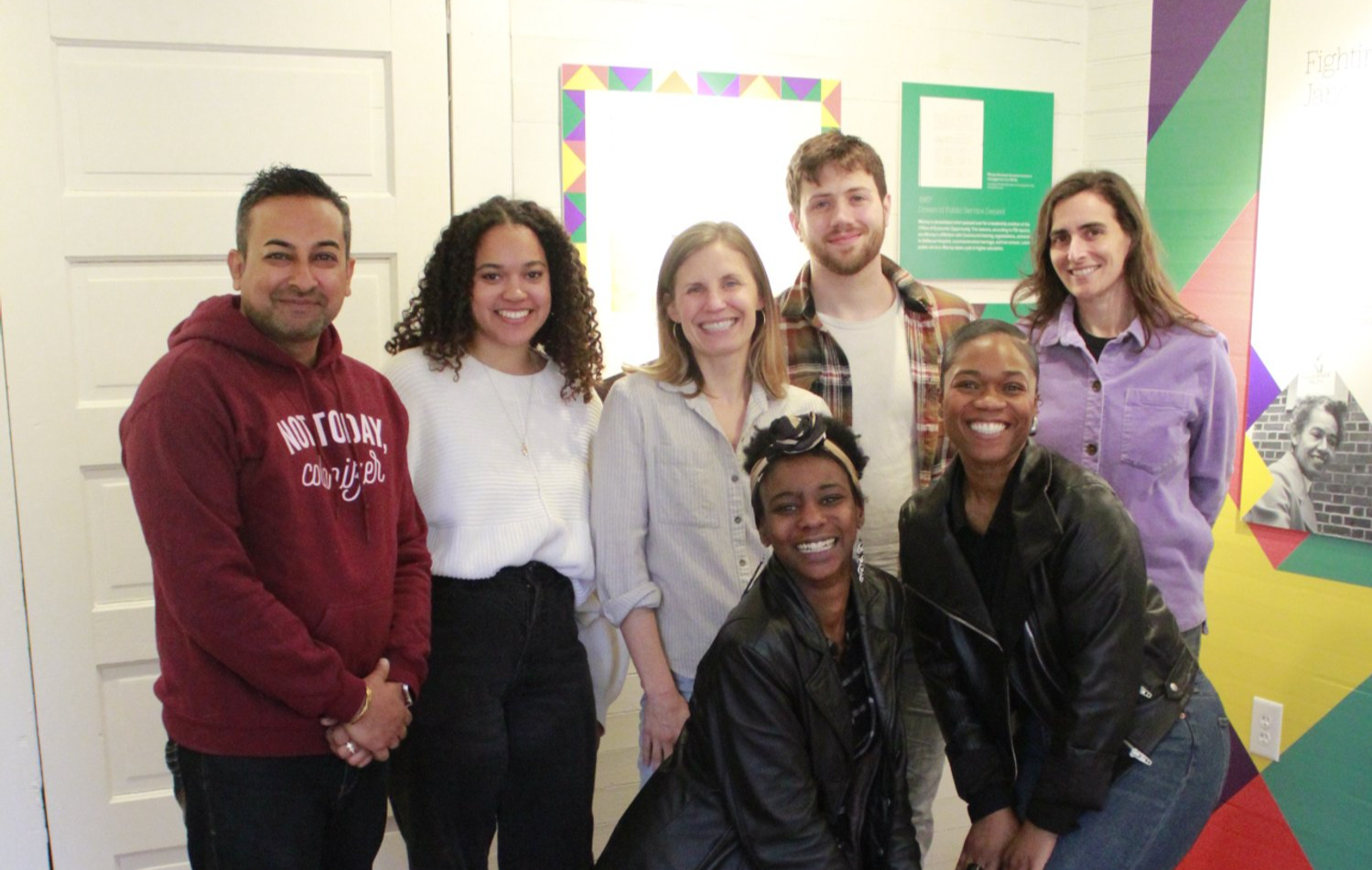
Applications are now open for the third cohort of the Pauli Murray Social Justice Teaching Fellowship. Eight educators will be selected for a seven-month professional learning experience presented by the Pauli Murray Center for History and Social Justice in partnership with the David M. Rubenstein Rare Book and Manuscript Library at Duke University.
Rev. Dr. Pauli Murray used disciplined research, legal reasoning, writing, coalition building, and courageous dissent to expose injustice and imagine a more whole and democratic future. This fellowship asks educators to do more than study Murray as a historical figure. Fellows will work through Murray’s methods as they investigate primary sources, examine Durham’s histories of activism, and design meaningful learning experiences for students.
Archives are not only records of the past. They can be portals to Black futures, helping educators and students identify what communities built, what institutions attempted to erase, whose evidence survived, and what unfinished work remains.
Important Dates
Application opens: Sep 3, 2026
Application deadline: Sep 15, 2026
Applicants notified: Oct 1, 2026
Institute Day 1 at the Pauli Murray Center: Oct 17, 2026
Institute Day 2 at the Rubenstein Library: Oct 24, 2026
What is the Fellowship?
The Pauli Murray Social Justice Teaching Fellowship is an intensive, cohort-based professional learning experience for middle and high school educators. Fellows will study Pauli Murray’s life, ideas, and strategies for change while working directly with archival materials related to civil rights, education, gender equity, labor, legal history, activism, and social movements.
The program combines historical study, archival research, primary-source pedagogy, legal and policy guidance, site-based learning, collaborative curriculum development, and public presentation. Fellows will move through a shared process: encounter the archive, interrogate the evidence, construct an argument, design for students, receive feedback, revise, and share the work publicly..
Who Should Apply?
Applications are open to middle and high school teachers, media specialists, instructional coaches, curriculum specialists, and other education professionals working directly with students in Durham county.
Applicants should be committed to teaching accurate, evidence-based history and helping students engage thoughtfully with complex questions.
Applicants must be able to participate fully in the required institute dates, virtual sessions, site visits, independent research, and final presentations.
No previous archival research experience is required. Fellows will receive direct instruction and structured research support.
Educators from a range of subjects, grade levels, school types, career stages, and backgrounds are encouraged to apply.
Preference may be given to educators serving Durham County students and to traditional public-school educators.
What Fellows Will Experience
A two-day institute at the Pauli Murray Center and the Rubenstein Library
Hands-on instruction in archival research, catalog and finding-aid navigation, reading-room practices, primary-source analysis, digital collections, and ethical use of special collections
Study of Pauli Murray’s life, legal impact, writing, intersectional analysis, and methods for social change
A virtual legal and policy session examining the changing North Carolina education landscape, public-employee speech, curriculum challenges, documentation, and professional risk management
A virtual curriculum studio for peer review, instructional coaching, and project development
Two Social Justice in Action site visits connecting historical evidence with contemporary community work
At least one educational program at the Pauli Murray Center
Ongoing research assistance, feedback from librarians and archivists, and collaboration with a cohort of thoughtful educators
Preparation to share the cohort’s work with educators across North Carolina
What Fellows Will Create
This is a working fellowship. Participants will complete substantial independent research and produce materials intended for real classroom and public use.
A K–12 adaptation of a Rubenstein Library Digital Teaching Module, including learning objectives, primary-source activities, student materials, and supporting resources
A contribution to a collaborative traveling exhibition, including panel text, source citations, and visual selections
A research log and curated primary-source set
A revised final product incorporating feedback from peers, program staff, librarians, and archivists
An article, blog post, media product, or reflection sharing the fellowship’s impact
A collaborative presentation at the North Carolina Council for the Social Studies annual conference
A plan for sharing fellowship resources with colleagues and the broader educator community
What Fellows Receive
A $650 fellowship stipend, distributed after required program benchmarks are completed
Eligibility to earn up to 6.0 continuing education units upon verification of all required contact hours and independent work
Eligibility to request up to $425 in classroom project support for approved fellowship-related student learning
Archival reproduction and digitization support within Rubenstein Library program guidelines
Registration and travel support for Fellows presenting at the North Carolina Council for the Social Studies conference
Expert guidance in archival research, primary-source instruction, curriculum design, legal literacy, and public presentation
Curated teaching resources and access to a professional network of educators, archivists, scholars, and community leaders
Recognition at the final convening and celebration
Time Commitment and Fellowship Requirements
Applicants should understand the scope before applying. The complete fellowship represents approximately 60 hours of professional learning: about 24 contact hours and 36 hours of documented independent work.
Full participation in both institute days is required.
Fellows must attend the two virtual sessions, two site visits, one required Pauli Murray Center educational event, and the final convening.
Fellows must complete archival research, curriculum development, exhibition work, revision, reflection, and conference-presentation preparation.
Stipends and CEUs are tied to verified completion of required benchmarks.
Meals, travel time, regular classroom teaching, and unstructured volunteer service do not count toward CEUs.
The legal and policy session provides general professional education and does not establish an attorney-client relationship or offer individualized legal representation.
2026–2027 Fellowship Timeline
September 2026: Application period and cohort selection
October 2026: Two-day institute at the Pauli Murray Center and Rubenstein Library
November 2026: Virtual legal and policy landscape session
December 2026: Independent archival research and project development
January 2027: Social Justice in Action site visit and curriculum development
February 2027: Virtual curriculum studio and peer feedback
March 2027: Second Social Justice in Action site visit and North Carolina Council for the Social Studies presentation
April 2027: Final products, public sharing, closing convening, and celebration
How Fellows are Selected
Fellows will be selected through a competitive application review led by representatives of the Pauli Murray Center and Rubenstein Library. The selection committee will consider the quality and thoughtfulness of each application, commitment to full participation, potential classroom and community impact, and the overall composition of the cohort.
The committee will seek a cohort representing varied grade levels, subject areas, schools, professional roles, experience levels, and backgrounds. The goal is not to select eight educators who already know everything. The goal is to build a cohort prepared to learn deeply, support one another, and turn rigorous research into responsible classroom practice.
Ready to Apply?
Review the complete fellowship commitments and dates before applying. Applicants selected for the cohort will be asked to accept their place promptly and sign a Fellows Agreement confirming their participation.
Questions?
Contact Cori Greer-Banks, Fellowship Program Director, at fellowships@paulimurraycenter.org