
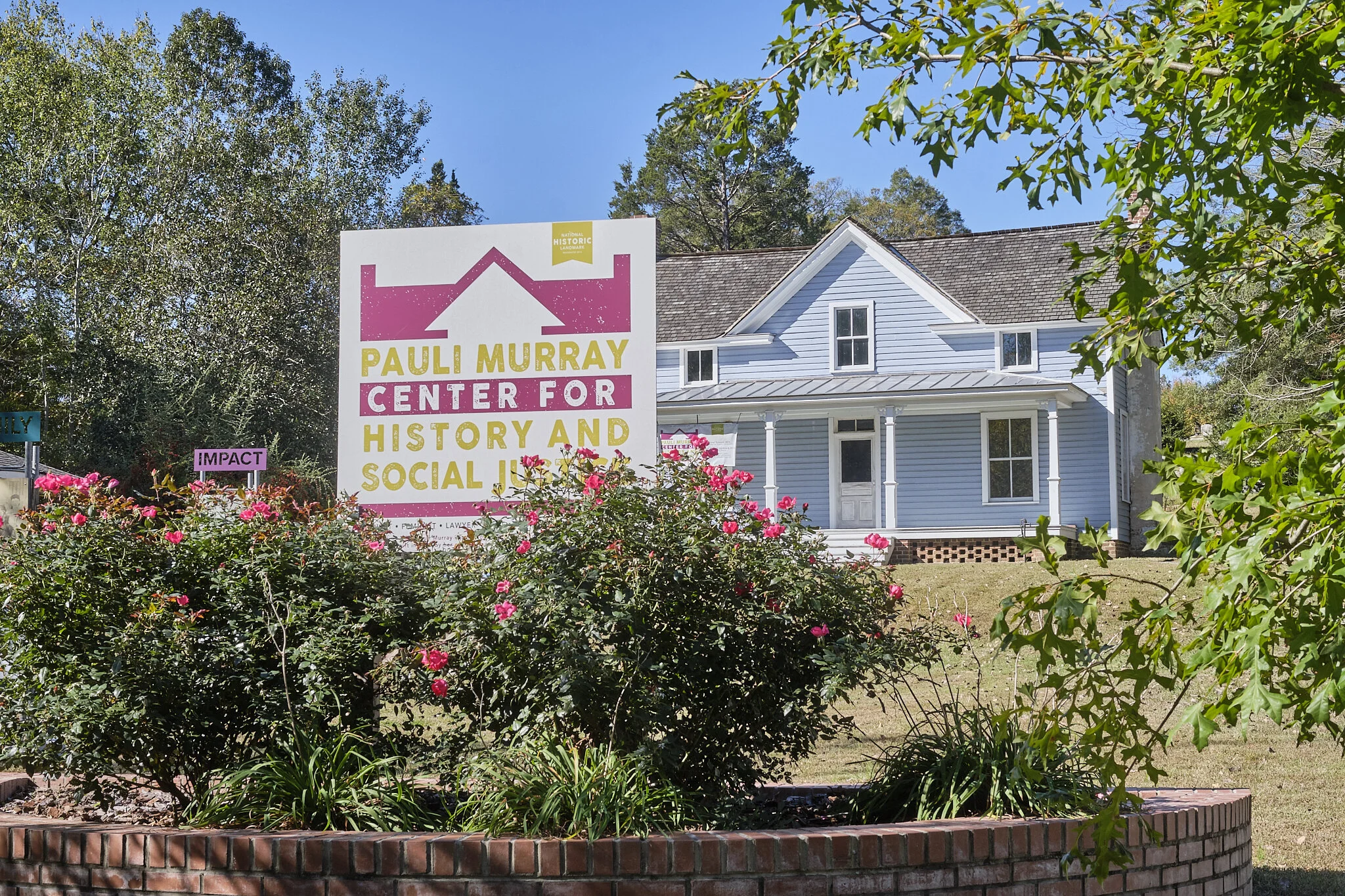
Pauli Murray Center Awarded Grant by The Andrew W. Mellon Foundation

The Rev. Dr. Pauli Murray’s legacy and vision for a just and equal world will be amplified by a $1.6 million, 3-year grant by The Andrew W. Mellon Foundation to the Pauli Murray Center for History and Social Justice. Since 2012, the Pauli Murray Center has worked to lift up the life and legacy of Rev. Dr. Pauli Murray, a twentieth-century human rights activist, legal scholar, poet, Episcopal priest, and multiracial Black, LGBTQ+ community member.
Murray’s expansive vision, their activism, and scholarship resonate more deeply today than ever before: her national visibility is growing exponentially at the same moment that our country is re-examining its history and collectively imagining a more inclusive future. “This is a transformational moment for the Pauli Murray Center,” shared executive director Barbara Lau,“ a moment when the world needs to be introduced and inspired by Murray’s vision and the Pauli Murray Center is ideally situated to radiate this powerful narrative from Durham, NC to the world.” Only 2% of the 95,000 entries in the National Register of Historic Places focus on the experiences of African Americans. Rev. Dr. Pauli Murray’s family home place highlights important, yet underrepresented, African American and LGBTQ+ stories.
Through the investment from The Andrew W. Mellon Foundation, the Pauli Murray Center will expand staff capacity to design and install inaugural exhibits at the historic site. “Over the last ten years, the Center has built a strong foundation,” Board Chair Mayme Webb-Bledsoe reports,“and this infusion of resources will significantly grow the scope of our programs and impact.” The Center will host innovative educational programming that responds to the Rev. Dr. Murray’s call to work intersectionally—inclusive of race, class, sexual orientation, gender, and faith; to connect history and humanities to contemporary life and to inspire creative thinking and rigorous social justice activism.
Grant funds will also support the completion of the renovation of the National Historic Landmark Pauli Murray childhood home and commission of public art on the property. This investment will also ensure the entire site at 906 Carroll Street is fully accessible and will transform a 1920’s duplex on the property into the Center’s Education & Welcome Center.
The Pauli Murray Center for History and Social Justice was incubated at the Duke Human Rights Center/John Hope Franklin Humanities Institute at Duke University. To realize a world in which wholeness is a human right for all, not the privilege of a few, the Pauli Murray Center actively works toward fairness and justice across divisions such as race, class, sexual and gender identity, and spiritual practice that often divide us. The Center embraces the transformative power of collecting and telling our stories and our truths as a process that heals long-standing divisions and promotes human rights.
For more information, contact Barbara Lau at executivedirector@paulimurraycenter.org

Reflections on Just Conversations by Kim Gaubault (McCrae)
I remember the immediate connection I felt with ME when I found out about Pauli Murray, who she was and how she chose to show up in the world. The legacy to which she tirelessly committed herself gave me permission to be seen and heard in a world that prefers to invisibilize those considered to be a 'problem'. Because of choices she made and uncomfortable/uncommon conversations she made room for, my Black womanhood has agency, not because of permission given, but because I am. The members of the Pauli Murray Center for History and Social Justice have committed themselves to a mission and vision that represent the heart of the Rev Dr. Pauli Murray. The Center's programming consistently calls forth the wisdom and presence of this mighty ancestor and Just Conversations is one of the latest iterations of this insightful and intentional space-making.
Just Conversations gives voice to some of the more complicated societal dynamics that are inevitable and present in places where social justice is centered. Through setting the intention to dive deeply into the ways that being human impacts how we show up when we are forced to face our own challenge areas, Just Conversations requires accountability of the compassion and awareness we say we have as it pertains to diversity, equity and inclusion. What a courageous way to call us into Pauli Murray's own definition of community. Murray said, "True community is based upon equality, mutuality, and reciprocity. It affirms the richness of individual diversity as well as the common human ties that bind us together." Welcome to an opportunity to come face to face with who you really are, the good, the bad and the ugly. Welcome to the conversation!

Interview with the Rev. Kim Jackson
Barbara Lau and Frachele Scott interviewed the Rev. Kim Jackson, Georgia’s first openly LGBTQ+ state senator.
Barbara Lau and Frachele Scott recently interviewed the Rev. Kim Jackson, who is giving a sermon at the annual Diocesan observance of the Feast of the Rev. Dr. Pauli Murray on July 1. This interview was edited for length.

Rev. Kim Jackson: It’s nice to meet all of you. Thanks for having me. I am the Reverend Kim Jackson; in some capacities, the Reverend Senator, Kim Jackson, I guess. I represent the good people of Stone Mountain, Georgia; Tucker; and a number of other places around Metro Atlanta. And I also get to serve as the pastor and senior minister at a church that serves people who sleep outside here in the city of Atlanta, called Common Ground.
Barbara Lau: Could tell us how you have been inspired by the Reverend Dr. Pauli Murray?
KJ: I get asked this question often now, which is a real gift and says so much about the ways that Pauli Murray's legacy has really expanded and that more people know about her. I went looking for Pauli Murray. I didn't know that was who I was looking for. I was a seminarian who was Black and female and queer. And I was looking for an Episcopalian who was Black and also queer and ordained. I went to seminary in the early two thousands, and there weren't a lot of Black out queer folks or Black queer priests in the church.
I went and asked folks, “Who in this church has ever been ordained who was out and queer?” And that's how I found Pauli Murray. She of course had already long gone to glory. But, I got to read about her, and it was a really critical time in my life, because I was having some real serious doubts about whether or not there was a place for me, as a Black woman and queer person in the Episcopal Church. And reading about Pauli Murray and her legacy and all that she did, particularly her investment in issues of social justice, reaffirmed for me that not only was there a space for me, but there was somebody who had already blazed the trail for me.
Frachele Scott: So Reverend Senator Jackson, in what ways do you continue to feel called to live out Pauli's vision and legacy?
KJ: I have spent a lot of time reading Reverend Pauli Murray's autobiography and learned so much about her real clear sense of we can have equity in this world. There's a place for women that is broader and bigger than the patriarchal society that we were born into. And that there's also a specifically a place for ordained people to speak those truths to power. And she did that work within the church, especially, and then beyond in terms of her legal work and scholarship. And so I find inspiration in that, in my own work, as both a clergy person who continues to engage in the Episcopal Church and tries to call the Episcopal Church forward towards more justice. And then of course, I feel like every time I step on the floor of the Senate in Georgia, Pauli Murray as a saint is with me in that work, and their legal acumen inspires me to think critically and smartly about legislation that comes across my desk. And I very much understand Reverend Murray to be in my great cloud of witnesses.
I feel like every time I step on the floor of the Senate in Georgia, Pauli Murray as a saint is with me in that work, and their legal acumen inspires me to think critically and smartly about legislation that comes across my desk. And I very much understand Reverend Murray to be in my great cloud of witnesses.
BL: So I understand there's actually a story about the stole that you wore when you were sworn in. Do you mind sharing that with us?
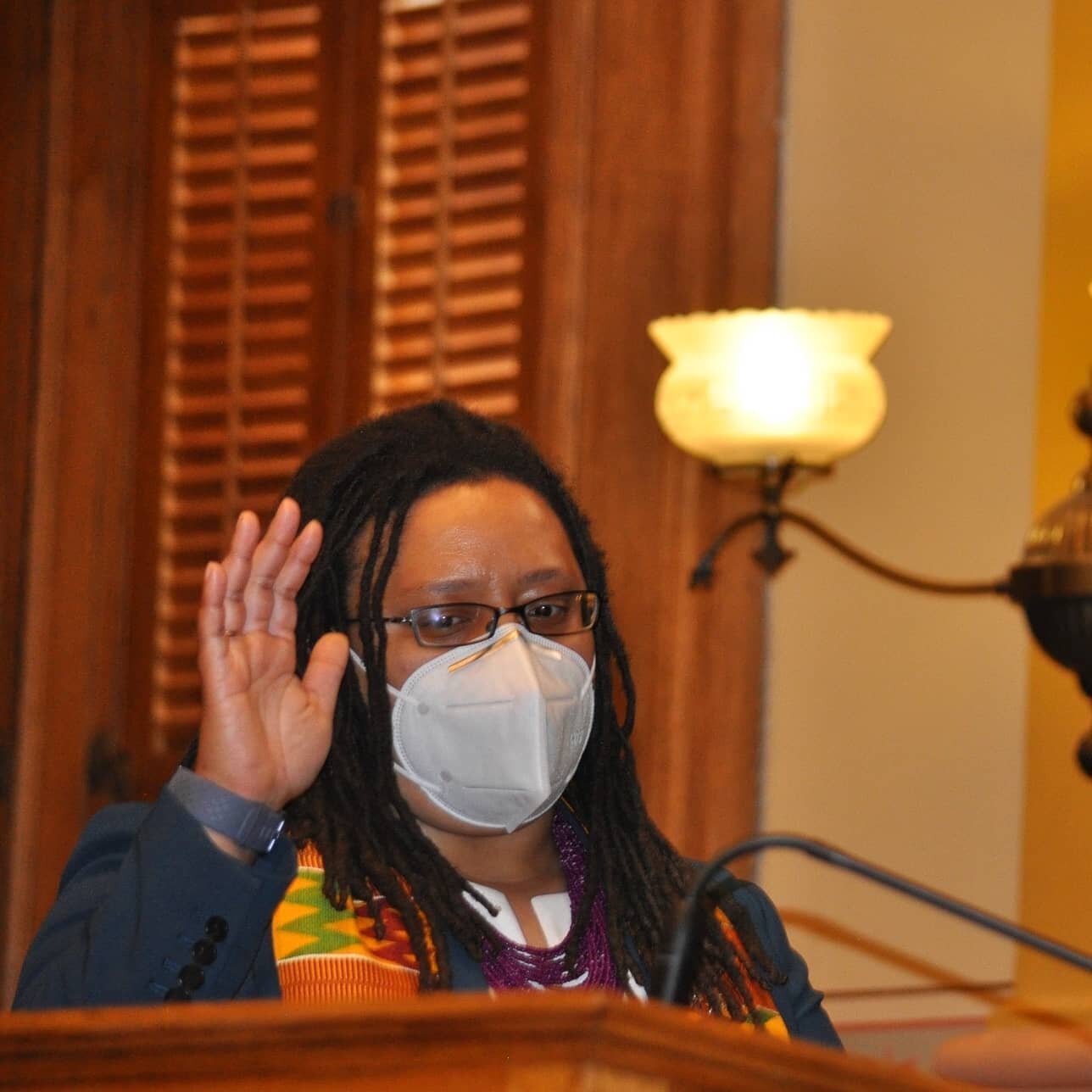
KJ: Pauli Murray has inspired me since I was a seminarian, before I was ever ordained. And, I had heard tell that there were a few stoles that Pauli Murray had left specifically with Black women Episcopal priests, that those existed out somewhere. I didn't think to ask for that when I was getting ordained, but when I was getting sworn in and already really understood the ways that my life intersected so much with Pauli Murray’s.
I sought out a stole, and I ended up calling my godmother, who is an ordained Episcopal priest in Maryland, a Black woman. And I said, “You know, I'm trying to find a Pauli Murray stole because I want that symbol with me when I get sworn in.” And she was like, “Well, you're in luck. I happen to have one. So how about I send it to you?” And she did, and it was such a moment.
I've been ordained twice. I've been ordained as a deacon, then ordained as a priest, and swearing in is not an ordination, but I will say it's one of the more holy moments of my life. And it was made, I think, particularly holy because I had that symbol that I knew that Pauli Murray had also worn on her small little frame. That was on my shoulders. And so it is one of the more holy moments in my life, and I feel incredibly blessed that I was able to wear that stole on that day.
FS: An extra question -- my great-grandfather was from Stone Mountain, Georgia. He was Episcopalian. He would go on to become a minister. And so I know a little bit about Stone Mountain, Georgia. What do you think Pauli would be whispering in your ear about your representation in Stone Mountain, Georgia as a queer woman of color in politics?
KJ: First of all, I think she would be amazed, right? That this is even happening in Stone Mountain, Georgia. So for people who aren't familiar with Stone Mountain, Stone Mountain was the place in which the Klan was kind of re-invigorated. It is literally a mountain of stone in which the Confederate soldiers have been carved. It’s the largest granite relief that we have in the world paying homage to the Confederacy. And so there's so much that I think many of us could never have imagined about the fact that a Black woman is representing Stone Mountain.
I think that Pauli Murray lived a life that was very much committed to thinking intentionally about people who were marginalized and the ways that they should have a role in society. And the Stone Mountain of today is a place in which refugees have been resettled: people from all around the world, where if there was a war there, somebody from that country now lives here.
I think that Pauli Murray would be whispering to me, make sure those folks are taken care of, make sure they get an opportunity to live the American dream if that's the thing. I think that Pauli Murray would very much be invested in making sure that this new generation, these new Americans that have come and found themselves at home in Stone Mountain have a true place and voice in society, that they have opportunities for jobs, they have opportunities for things that help them to thrive. I do think that that's what Pauli would say. And that's certainly what I'm trying to do as the Senator that represents that area.
BL: I know that the service at St Titus is coming up, July 1st. And I wonder how you're thinking about or preparing for that sermon. Not that you need to give us a preview.
KJ: So I've spent a lot of time really praying about this, full transparency. I never anticipated having my life be compared to that of Pauli Murray’s. Pauli Murray is this hero that convinced me after she was even gone, that I could have a home in the Episcopal Church. But I never imagined that these comparisons would happen.
I've been trying to just spend a lot of time in prayer and reading through the lessons and really thinking about Pauli as how her legacy continues to speak to us, and how that is connected to the Gospel. I feel really clear that Pauli's life was extraordinarily Gospel-oriented in terms of bringing good news to women and saying you have a place, it's even written into the Constitution. Bringing good news to people of color, to Black people, especially in saying, integration and having opportunities for education is something that should be possible for us.
And so that kind of Gospel lens of seeing what our world is today and providing some good news is the lens that I'm trying to take as I prepare the sermon. I mean, I think that was her lens, right? She looked at the world and said, where can we find some good news in it? For people who have often been told not positive news.
FS: How do you hope Pauli will continue to inspire others?
KJ: I hope that more people will know their story. I don't know that Pauli Murray could have ever imagined a world in which people are able to be out and queer and free to identify as they and them. What I do know is that I hope that all of the non-binary Black queer folks, many of whom have reached out to me in my capacity as the first LGBTQ state Senator in Georgia, find inspiration in her life in the way that I did. And that we continue to share Pauli's story so that other folks can dream big dreams and can dream beyond their station in life.
I think that was one of the huge things about Pauli Murray's life. Pauli Murray was an orphan, raised by a single woman, was raised as a woman? I mean, all the odds were stacked against Pauli Murray in terms of what might be possible. There'd never been a Black woman ordained in the Episcopal Church and Pauli did it, and so I hope that other people begin to dream dreams and imagine things that they've never lived to see, but that they can actually fulfill themselves because they know the story of Pauli Murray.
BL: Why do you think it is important to have a place that honors Pauli Murray?
KJ: As somebody who wore a stole that Pauli Murray wore, I can speak with great clarity of the power that is found in that tactile experience. There is something about the incarnational aspect of seeing things. And I've visited a lot of sacred sites in my lifetime and those home places where saints have walked have always been holy spaces, it's holy ground. And we need to make sure that that ground is preserved and shared with others so that they can have that closeness as well.
I just want to thank you all for doing this, and for really sharing the legacy of Pauli Murray. It was 2009, 2010 when I started looking for Pauli Murray, and it wasn't easy to find anything about them at that time. And so I'm just really grateful that their legacy is being shared and preserved and spread around because it matters so much. And I know that I'm not the only Black queer Episcopal priest walking around here, who on the hard days remembers and celebrates and feels very much strengthened and buoyed by Saint Murray. We don't have guardians saints in the Episcopal Church, but if we did Pauli Murray would be like the guardian saint for the Black queer women. She's our saint, and she's with us. And I'm grateful that others will now get to know her as well.

Producing the Documentary "My Name is Pauli Murray"
Executive Director, Barbara Lau, recently interviewed Talleah Bridges-McMahon, the producer of the new documentary “My Name Is Pauli Murray.”
Executive Director, Barbara Lau, recently interviewed Talleah Bridges-McMahon, the producer of the new documentary My Name is Pauli Murray. This interview was edited for length.

Barbara Lau: I thought I would just open by asking you to share more about your role as the producer of the film 'My name is Pauli Murray.' What does that mean?
Talleah Bridges McMahon:
I feel like even if you work in the industry, people are always confused about what a producer does. It's one of those roles that, depending upon the project, has different meanings. I will say that Betsy West and Julie Cohen, who were the directors of the film, they're very collaborative. They had a vision and my role was to help them achieve that. And so from the very beginning, the three of us were really working together to come up with, you know, answering the big questions: how will we tell the story of Pauli Murray? Who will we talk to? Who will our editor be? You know, our editor Cinque Northern was definitely the fourth key collaborator in this process, so that was actually a very important decision to make. Then just going through and actually coming up with how to approach telling the story in terms of which parts of Pauli's life to include, writing the various segments for the film, conducting the interviews and basically taking it through the edit.
BL: So you did a little bit of everything: research, writing, interviewing.
TBM: Exactly.
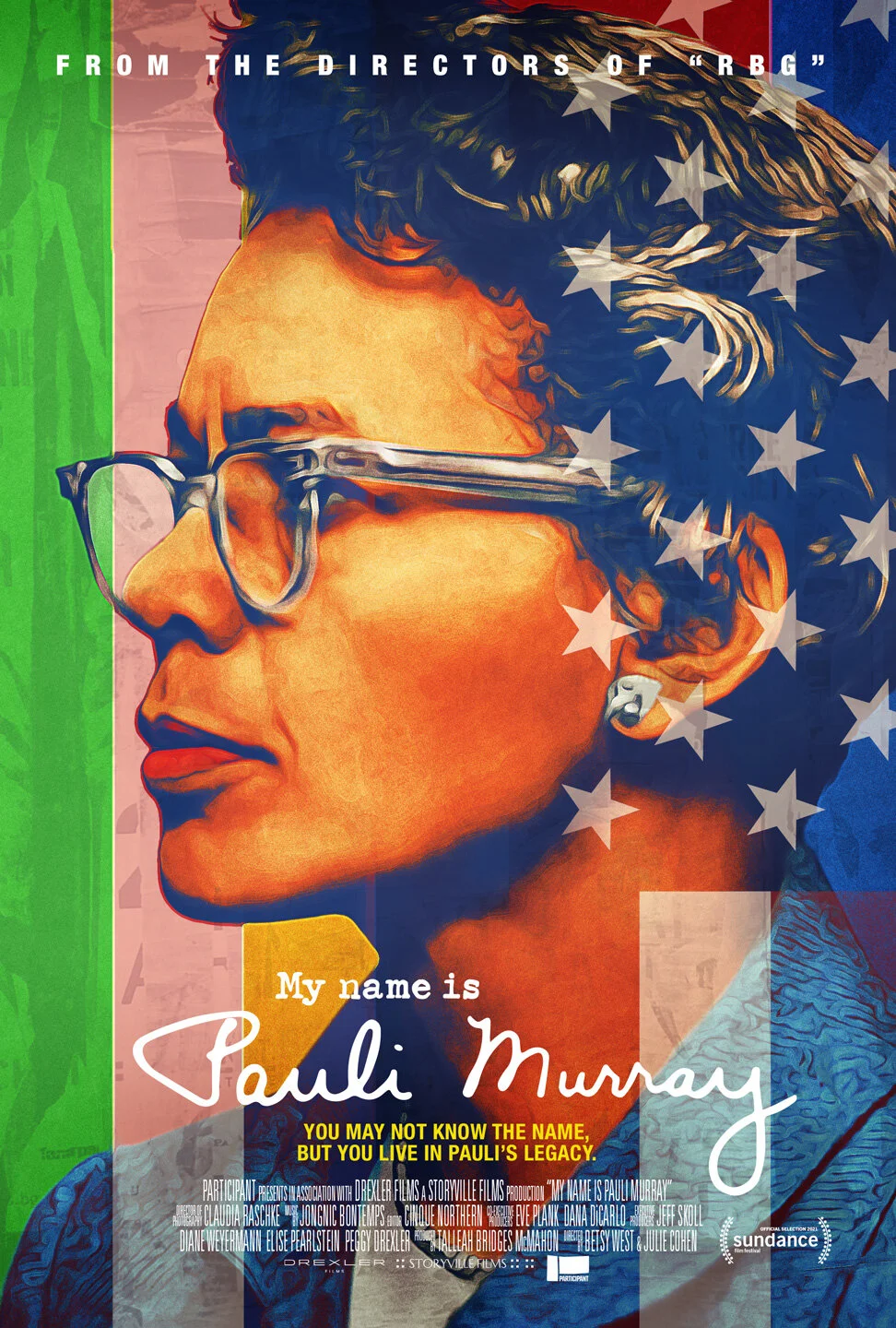
BL: Excellent. So just from your own perspective, why did you feel like it was important to make this movie?
TBM: I had heard Pauli Murray's name before - just in passing while working on other projects - but I didn't know anything about Pauli Murray when Betsy and Julie approached me about working on the film. They had learned about Pauli Murray through their film 'RBG' because Justice Ruth Bader Ginsburg was so influenced by Pauli Murray's work.
As they started to tell me all of the things that Pauli had actually done, I went from being blown away to being kind of angry. To me, it was an actual injustice that we didn't know Pauli Murray's name. Pauli Murray should be just as well-known as John F. Kennedy or Martin Luther King, Jr. I couldn't pass up the opportunity to be involved in getting Pauli's name out into the world. It just felt like such a wrong that had to be corrected.
BL: So you mentioned that the directors were very collaborative. What was that like? I mean, people come with different experiences, different identities, different attachments to a story.
TBM: Pauli's story is so rich and it has so many segments and so many components, there are all these different phases, different parts of Pauli's life. We started off by making a list of all of the stories that we could tell. Then we had a meeting to talk through why we would be telling those stories and what we each found compelling about those stories or why they were significant for understanding Pauli. We went through discussing each one and were able to whittle it down.
As we started actually crafting the film, we would go through that process again and again, with each of us talking about what we were interested in, what resonated with us, what wasn't really working, what maybe felt redundant. It was just an ongoing conversation that we had as we were crafting the film all the way to the very end.
BL: So do you remember what was on the top of your list?
TBM: A million things, and that was the problem. We all wanted to tell everything. So the question was, what could we actually let go of? That was probably one of the more challenging components of telling Pauli's story. I would say there were little things that I said, “Oh, I really want to make sure we get this in there.” So when Pauli is at Brandeis pushing for tenure, and they're saying “you haven't really done anything impressive enough to warrant granting you tenure.” For me, that was the epitome of Pauli being ignored and unrecognized.
It was important for us to take the audience to that point. So by the time that is happening, the audience is feeling that outrage, like I felt, knowing that happened. And so things like that, knowing that we wanted to craft a story so that by the time you get to that part of Pauli's life, you too were feeling the injustice that Pauli would have felt in that moment.
BL: Is there some way that you personally really identify with Pauli or some part of Pauli's story?
TBM: In starting the film Pauli seemed very intimidating to me. I felt like, having read the books, Pauli clearly had a brilliant mind. I felt like Pauli was sort of a larger-than-life figure. It was really in going to the archive and reading so much of Pauli’s personal struggles - I'm the one who spent a lot of time at the Schlesinger Library - that Pauli became more of a regular person. I was surprised to see that Pauli left so many personal documents. You know, I would expect someone to leave drafts of speeches and legal documents, but Pauli left so many diary entries and letters to and from friends and family.
In reading those, one of the biggest things it seemed to me that Pauli is grappling with is: how do you build a life that is satisfying in a world that is not necessarily there to support you doing so? Pauli is constantly trying to figure out how to create happiness and joy and satisfaction, from the beginning to the end. And that, to me, was very relatable. I would also say Pauli's family connection was another aspect of Pauli’s life that felt familiar to me. I actually come from a family that I think is very similar in that there's a lot of racial pride. I didn't really grow up feeling the prejudices of the country because I was pretty insulated from that perspective within my household. It's something that I became aware of the more I went out into the world, but it was something that I didn't really internalize I think because of the family that I had.
“Pauli is constantly trying to figure out how to create happiness and joy and satisfaction, from the beginning to the end.”
BL: Was there any one piece of paper, any one journal entry, any one thing you found there that you really have a strong memory of?
TBM: Pauli's relationship with Renee Barlow felt, for a while, sort of elusive to me. Pauli doesn't write much about Renee. From a filmmaking perspective, one thing that we struggled with for a while, an open question we had was: how do you tell this part of the story? You know, in the archives, there was a lot of documentation of a lot of things, but here are only two photos of Renee. So we weren't quite sure how we would approach telling their connection and telling that as a love story. On one of our trips to the Schlesinger Library, actually the last trip that I ended up taking because of the pandemic, I just decided to pull everything that looked like it had anything to do with Renee Barlow.
I remember opening a folder and it was the letters between the two of them. They hadn't been printed anywhere that I’d seen. They hadn't been reprinted in any of the books that I’d read. It was in those letters that I could feel the connection. And the idea that Pauli is connecting through the written word, which is so important to Pauli. It's one of those joyful moments where you see everything coming together, it's just so adorable and so intimate and so sweet and so playful. I hadn't really expected that either, that these two people - who seem sort of serious to me - would have all these playful nicknames. That was really touching.
Oh my gosh, there's a letter when Pauli is at Howard law school. It seems like Pauli was probably seeking help for physical health problems and sometimes for mental health problems. there's a letter that I came across that Pauli wrote to Aunt Pauline while all of this is happening, Pauli would be early thirties, in terms of age. Pauli is writing to Aunt Pauline to say “the thing” that happens is happening again and Pauli specifically says the thing that you call my “boy-girl personality” is getting me in trouble. To see that Pauli had someone to write to about it - I had been working under the belief that Pauli was really isolated when it came to that. To see that Aunt Pauline was still such a close confidant into adulthood was just so amazing and reassuring. I wish we all had an Aunt Pauline.
BL: Several of the things you've said really reflect your goal about telling a story from a different point of view, from a little bit more of the inside, not from the exterior gaze. How did that play into the whole dynamic around the decision-making in the film?
TBM: It's really hard to tell someone's story. There's a great responsibility that comes in even daring to take on that task. So what we all kept going back to was, what is Pauli's truth in this moment? Who was Pauli in this moment and how do we make sure we are keeping sight of that? As much as we could, we tried to anchor everything in Pauli's perspective. We were trying to avoid projecting what could be something like an external point of view onto Pauli's life journey.
Pauli’s experience at Brandeis as the black power movement was on the rise is a good example of this. I think if you don't know Pauli specifically, you could very easily assume because Pauli is a person who's ahead of the times. Pauli is fighting for social justice causes, so that Pauli is definitely going to be down with the Black Power movement because it's the movement of the day and it's considered the radical movement. Then to see that actually, at this moment in time, Pauli has a completely different perspective on all of this. It's important to us to say this is Pauli crafting a particular journey that is true to Pauli. It's not the “Black civil rights activists” experience. It is Pauli's experience.
BL: What is it that you hope people will take away from this film? What was the audience you had in mind?
TBM: It became really important to us to show the losses. This wasn't just the story of a person who set out to do amazing things and actually accomplished those things. It's actually very remarkable to say Pauli influenced the argument that Thurgood Marshall and NAACP made when arguing for Brown vs Board of Education. Pauli influenced Ruth Bader Ginsburg's arguments at the Supreme court for gender equality. Those are the things that when I heard them, I thought “Oh my gosh, why don't I know about Pauli?”
But it was learning about all of the things that Pauli did that didn't work out that I found most compelling. I think so often people who are fighting for change are not having victories. It's very easy to be dissuaded by that. If you are fighting for change in this country, you can be discouraged. That would be justifiable and giving up would be justifiable. That would all actually make sense to me.
To see a person who kept persisting, even without those victories coming so easily, I found that so inspiring. The bigger thing is that Pauli didn’t even know all of the time when Pauli was doing something that would make an impact or that any impact was being made. I hope what people who are fighting for change take away from this is that even if you don't see the impact of your efforts, you have faith that they actually are not being made in vain. You know, change does happen.
BL: How are you different now that you know this story so intimately?
TBM: I mean, it's an interesting time, right? To work on a film like this when we were in the middle of what I will call a highly problematic presidential administration. There is a rise of white nationalism. I became sort of disillusioned. I think for me it was a good reminder that it's actually fantastic that we have all of these movements that are pushing back. We had Black Lives Matter growing more. The Me Too movement. It's actually those movements that give me hope. It is the resistance to what I was describing. I think what I took away from it is that there are so many Pauli Murrays. Pauli Murray is brilliant, but also not that different than so many other people. It's like each generation has a lot of Pauli Murrays who are pushing for change and accomplishing things. You always have the people who are working to be divisive. So it is great to also have the people who are working to be more inclusive.

BL: You all came from different backgrounds and experiences. Did you ever clash as you were making the film?
TBM: I should say I've worked with Betsy and Julie on another project. From that experience, I knew that collaborating with them on this, there wouldn't really be clashes. I don't think we have the personalities that prompt a clash necessarily. It was much more like, “I think this thing because of this reason” and someone else saying, “huh, interesting. Let me think about that.” So we were constantly just having discussions. We didn't always agree. There were definitely moments where I might say, “I see what we're trying to do here, but I don't think it's playing correctly,” or, “it seems a little off for this reason.” Sometimes me and our editor Cinque - I'm Black, he's Black - there were some moments where we said, “as Black people, we think that this isn't quite playing correctly” and they would have to say, “huh, what do you mean?”
Then we'd explain it and we'd go through it. We'd just have to start reworking things. I remember them very explicitly saying, “well, we don't really know what you're saying. We don't see this thing that you're flagging, but we trust that the thing that you're saying we should do is the thing we should do. So let's do that thing since you both seem to think we should do that thing.” I think that's important for a person to get to the place where they can say, “I don't really know what you're saying. That's not my experience. That's not how I see things, but I trust that it matters. So go ahead and do what you think we should do
BL: Is there anything that learning about Pauli's story and being involved in the project pushed you to ask yourself or to really think more deeply about yourself?
TBM: I feel like there's a thing that I struggle with - to what extent does the work that I do matter? I have different answers to that at different times. When I was younger, I thought documentaries about very important issues would enlighten people and then the world changed. I didn't really realize that the world wouldn't change. It's been a process.
I would say that in doing this work, if I'm lucky, there are moments where I do actually hear feedback from audiences about why these projects have mattered to them, why my work has mattered to them. That is what keeps me going.
I think that there are moments where I can lose sight of that. And I think Pauli probably had the same experience. You are working on something and you don't necessarily see the impact of that thing. You just have to have faith that you are having some sort of impact, that the work that you were doing and your investment of time does have value.
BL: What's next? What are your hopes now that the film has premiered and gotten a lot of attention?
TBM: It's great to premiere at Sundance. It’s a fantastic platform to launch the film, but we are now working on a wider release. So we're really excited about the possibility of just more people seeing and getting to know Pauli's story.
BL: Thank you so much for your time today. We really appreciate it.
TBM: You are very welcome.
Loss and Hope
In this devasting, heartbreaking year, we mourn the loss of Civil Rights activist John Lewis and Pauli Murray’s friend Justice Ruth Bader Ginsburg, titans of the American human rights community. And we mourn the loss of peace, labor, and human rights activist Ray Eurquhart and West End neighborhood advocate Dorcas Bradley from our Durham family.

In this devasting, heartbreaking year, we mourn the loss of Civil Rights activist John Lewis and Pauli Murray’s friend Justice Ruth Bader Ginsburg, titans of the American human rights community. And we mourn the loss of peace, labor, and human rights activist Ray Eurquhart and West End neighborhood advocate Dorcas Bradley from our Durham family.
"Ours is not the struggle of one day, one week, or one year,” proclaimed John Lewis, “Ours is not the struggle of one judicial appointment or presidential term. Ours is the struggle of a lifetime, or maybe even many lifetimes, and each one of us in every generation must do our part."
Ours meaning we all have a stake in the fight for dignity and justice. “If you rip away everything, the business of oppression is the business of not respecting one’s personhood,” Pauli Murray said in a 1976 interview, that each person “may stand and feel a sense of dignity and relatedness to other people.”
Pauli Murray called her life-long struggle for human rights a relay race in which she had won a few and lost a few, but thankfully survived to see some of her lost causes found. For Pauli Murray, John Lewis, and Ruth Bader Ginsburg, an unwavering sense of hope fueled their life-long activism and acted as a pillar they could hold on to. They all understood themselves to be runners in the long relay race toward justice.

It was Ruth Bader Ginsburg who said, “Justices continue to think and can change…I am ever hopeful that if the court has a blind spot today, its eyes will be open tomorrow.” The court is not the only American institution with serious blind spots today.
We honor Lewis, Ginsburg, Eurquhart, and Bradley by remembering and soaking up their wisdom. We honor them by picking up the baton and continuing on the justice track, by making sure all are included and no one is left behind.
We honor them by singing their song of hope and by working hard in ways small and large, across our differences and geographies, to support one another, to listen and learn from one another, to stand in solidarity with one another, in this long crusade for a more humane and caring world.
Black History Matters
Pauli Murray and the West End neighborhood in which she grew up are cornerstones of this history despite being little recognized and now threatened with erasure. These impactful stories, like the ones shared at the Carroll Street Block Festival, represent the promise of Durham, the spirit of self-determination that the working-class African American residents of the West End so embodied.
History is “the most potent cultural weapon in our final onslaught on inequality , ” Pauli Murray proclaimed in a 1957 speech at the Stanford L. Warren library in Durham. Learning African American histories was “ discovering the qualities of mind and spirit which had given us strength, endurance and dignity in spite of our slavery experience and in spite of continued humiliation—qualities and traditions which could be of value not only to ourselves and our children but to our fellow Americans.”
In the spirit of that final onslaught Murray envisioned, historic sites, like the Pauli Murray Center, where narratives that confront power are front and center, can sustain the momentum of the daily street protests and widespread calls to dismantle systemic racism across the globe. “[T]rue emancipation lies in the acceptance of the whole past ,” Murray shares in her 1956 book, Proud Shoes, and now is a time when we must face up to “ the degradation as well as the dignity of my ancestors.”
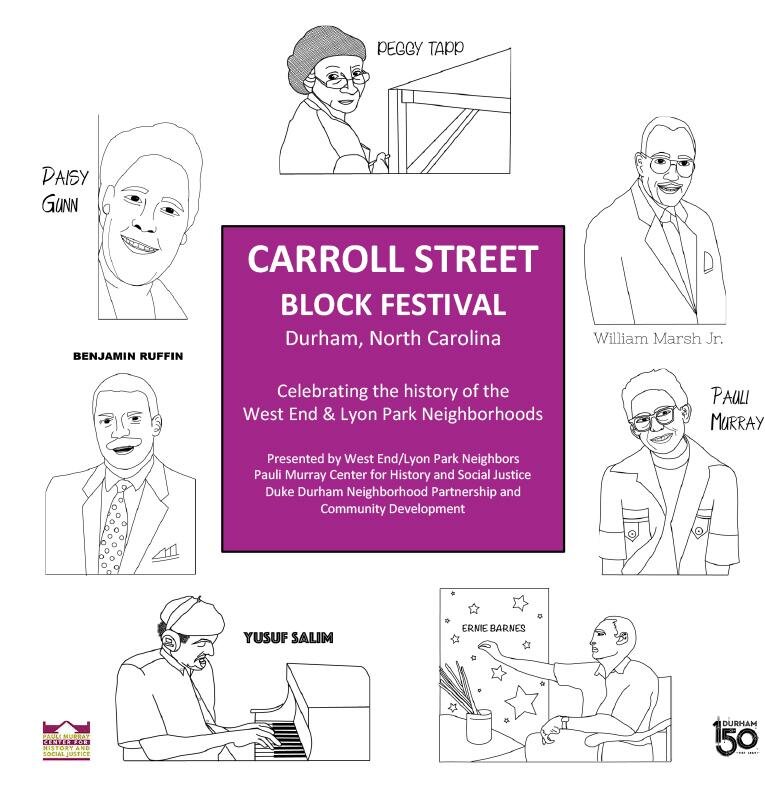
Pauli Murray and the West End neighborhood in which she grew up are cornerstones of this history despite being little recognized and now threatened with erasure. These impactful stories, like the ones shared at the Carroll Street Block Festival, represent the promise of Durham, the spirit of self-determination that the working-class African American residents of the West End so embodied.
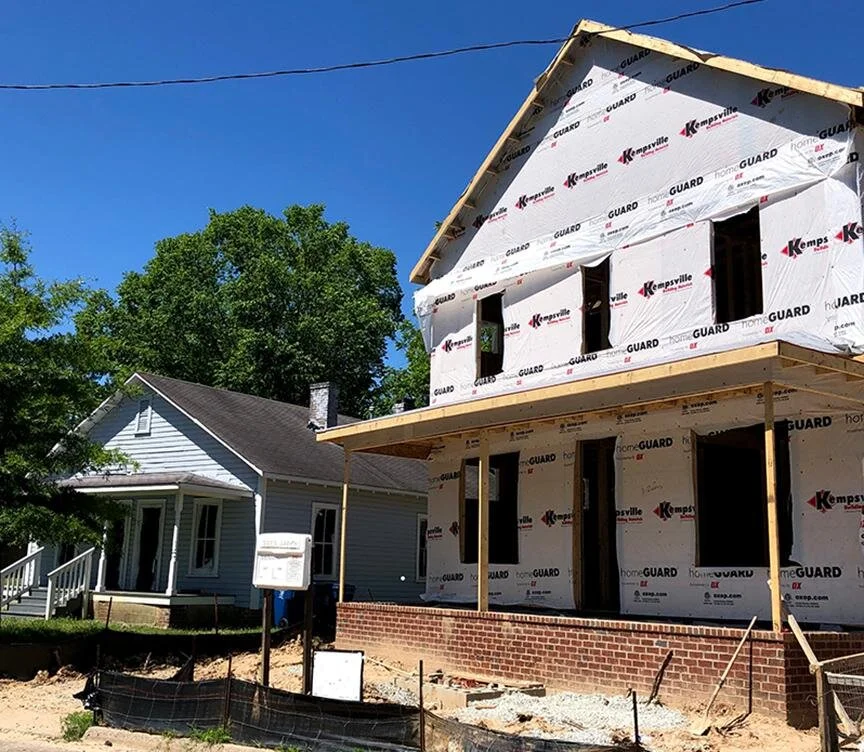
Our street, Carroll Street, tells the whole story of this impending loss. Long-time homeowners are being besieged by eager developers to sell their property.
Recently constructed McMansions are beginning to tower over former mill houses, overshadowing efforts from affordable housing developers to maintain the architectural feel of the neighborhood and invite working-class families to keep calling the West End home. We cannot lose these neighbors and these stories.
Less than 2% of historic register sites in the US commemorate African American history. Even fewer elevate LGBTQ history. We need these anchors now more than ever. These are the places where we can dismantle the systemic miseducation of white supremacy. These are the places where we can celebrate the qualities of mind and spirit that sustained the activists on whose shoulders we now stand. These are the places where we need to educate ourselves and generations to come so that the Movement For All Black Lives grows stronger and stronger.
Closing Doors, Opening Doors
When One Door Closes, Another Opens. Grandmother Cornelia often used these words to console Pauli Murray in the face of loss and disappointment. Those times were many in Pauli’s life. Now is also a time of loss, loss of life for Breonna Taylor, George Floyd, Tony McDade, and hundreds of others who have died in police custody, in prisons, in poverty, as a result of mob violence and/or institutional racism. We also mourn the loss of life for the more than 100,000 Americans, an inordinate number of whom were black and brown people, who have died because of COVID 19. Grief is all around us but it is fueling more than sadness.

Photo by Koshu Kunii

Cornelia Fitzgerald
When One Door Closes, Another Opens. Grandmother Cornelia often used these words to console Pauli Murray in the face of loss and disappointment. Those times were many in Pauli’s life. Now is also a time of loss, loss of life for Breonna Taylor, George Floyd, Tony McDade, and hundreds of others who have died in police custody, in prisons, in poverty, as a result of mob violence and/or institutional racism. We also mourn the loss of life for the more than 100,000 Americans, an inordinate number of whom were black and brown people, who have died because of COVID 19. Grief is all around us but it is fueling more than sadness.
It’s also opening doors and streets, city council chambers and conversations about race and transformation. Protestors are reigniting hope that change can and must happen, that we can close the doors to hate, state sanctioned violence, economic inequity, and heartless greed.

Pauli Murray reading from Dark Testament
The drivers are dead now , Pauli Murray writes in Verse 10 of her epic poem, Dark Testament , but the drivers have sons. The slaves are dead too, But the slaves have sons. And when the sons of the drivers meet sons of slaves, the hate keeps grinding on. Today we are led by young prophets to acknowledge this dirge of history , Pauli continues in Verse 11, and tell it everywhere to all who will listen. We will lay siege, let thunder serve our claim. For it must be told, endlessly told, and you must hear it.
We are called by Pauli Murray to this work at the Pauli Murray Center, to tell and acknowledge this dirge of history in service to transformation. We can close the door to police and state sanctioned violence, slashing police budgets like they are doing in Minneapolis and open the door to building community safety through community wellness strategies . We can close the door to poverty by advocating for living wages and the Fight for $15 campaign and crack open the door to economic equity and opportunity. We can close the door to ignorance by informing ourselves of the work of The 1619 Project and open the door to truth, the truth of the past that we have to reckon with today. Thank you Grandmother Cornelia and all of our ancestors whose wisdom provides our guiding lights.
Dark Testament and Other Poems . 1970. Reprint, New York: Liveright Publishing, W.W. Norton, 2018
Invoking a Just, Caring, and Humane Future
Our actions today are creating the future. What are we finding intolerable today that we want to make sure to change? What is bringing us joy today that we want to continue? Pauli Murray understood these deep connections between past, present, and future.

Our actions today are creating the future. What are we finding intolerable today that we want to make sure to change? What is bringing us joy today that we want to continue? Pauli Murray understood these deep connections between past, present, and future.
Forty-two years ago, today, May 14, 1978, the Rev. Dr. Pauli Murray was in Durham at St. Philip’s Episcopal Church. It was Mother’s Day and she was offering her first sermon as an ordained priest. And St. Philip’s was so appropriate for this occasion because it was the church her grandmother, aunts and mother attended before she was born.
The sermon started and ended with stories about the gifts of the impactful women in Pauli’s life: Grandmother Cornelia’s prophecy and a candid tongue, Aunt Pauline’s teaching, Mother Agnes’s work as a healer, Eleanor Roosevelt’s generosity and compassion, Aunt Sally’s laughter, and fellow Durhamite Susie A. Elliott’s (dean of women at Howard when Pauli was a law student) gift of graciousness and living creatively.
These gifts of the holy spirit are, Pauli surmised, the resources we need to call upon to “ share [our] different experiences, to help others enter into our own joys and sorrows, to feel as we feel, suffer as we suffer, and rejoice—to hear one another speaking in our own language. ” For Pauli Murray, hearing one another, seeing ourselves in another’s experience was the crucial step toward healing our society and ourselves.
For Pauli Murray, this healing, in her words, reconciliation, “cannot come without a simultaneous transformation of our society into a caring, humane society . . .” She invoked this vision for the future as a time “ where people are not just numbers in a computer; where human services are not tainted with the idolatrous notion of profit, power and privilege; where the elderly are seen as repositories of our collective wisdom and not as inconveniences to be endured; where children are given responsibility and expected to pull their weight in family and social undertakings; where waste becomes as socially undesirable as theft; and where it is the national ethos that human beings are our most important resource, that spiritual and physical energy is as important as energy from coal and oil.” *
The clarity of vision for a just tomorrow is one of Pauli Murray’s gifts to us. What are the gifts you bring to this work? How are your actions creating our future?
*Rev. Dr. Pauli Murray, “Gifts of the Holy Spirit to Women I Have Known” Sermon given May 14, 1978 at St. Philip's Episcopal Church in Durham. Pauli Murray Papers, Box 64, folder 1095, Schlesinger Library, Harvard
Drawing Inspiration from Pauli Murray
We hope this finds you well. The global Covid-19 crisis invites deep reflection by all of us about the principles and people we hold dear. You, our Pauli Murray Center family, are people we hold dear and we appreciate all that you are doing to survive and support your families and communities.

We hope this finds you well. The global Covid-19 crisis invites deep reflection by all of us about the principles and people we hold dear. You, our Pauli Murray Center family, are people we hold dear and we appreciate all that you are doing to survive and support your families and communities.
We find Pauli Murray’s guiding principles—justice, equity, creativity, and faith—instrumental to the ways we are understanding and coping with the impact of the pandemic. In particular, we can draw inspiration from Pauli’s story, especially from a time when she was forced to leave Hunter College because of the Great Depression. She was living in a crisis epicenter, New York City, at a time when, like now, people of color were disproportionately affected and were experiencing huge job loss, hunger, homelessness, and discrimination.
Pauli’s resourcefulness and versatility enabled her to weather this tough time. Pauli and her friend, artist Louise E. Jefferson , found lodging in a rooming house and negotiated for bathroom and kitchen time. Supporting one another, they pooled their resources. Pauli’s salary covered their rent while Louise’s earnings paid for food and entertainment. When they were a little flush they enjoyed a meal out or a show from the balcony of the Apollo Theater.
Pauli learned discipline from watching the meticulous approach Louise took toward her freelance design work for the YWCA and the National Urban League. She also learned a great deal about white supremacy and sexism by witnessing the inequitable impact of this national economic crisis on the health and wellbeing of people around her. These are lessons and insights we can benefit from today.
The well of resilience Pauli drew from is the same well we invite each of you to explore. We look forward to a time when we can welcome more of you to Pauli’s childhood home while remaining cognizant of the suffering in the present moment. The new educational lawn installation is ideal for the 6’ social distancing requirements. We also have some online resources—the Pauli Murray: Imp, Crusader, Dude, Priest exhibit and exhibit curriculum — to help you connect with Pauli Murray’s story and vision on your own.
We are listening for the lessons of this time and learning more about the social justice and human rights impact of the pandemic. We hope that, soon, we will be able to gather to share our insights with one another and build stronger, more equitable communities in person together.
Elders & Empires: Community Care in a Time of Crisis
Given our understanding of Pauli’s call to look to historically marginalized folks for leadership (in your sermon – to provide the cornerstone) and wisdom during challenging times (like now), what would the esteemed Rev. Dr. Pauli Murray be sharing with us now?
BY REV. RACQUEL GILL
Given our understanding of Pauli’s call to look to historically marginalized folks for leadership (in your sermon – to provide the cornerstone) and wisdom during challenging times (like now), what would the esteemed Rev. Dr. Pauli Murray be sharing with us now?

In 2015, as a recent seminary graduate, I was blessed to serve as a Pastor in Residence at the St. Paul Community Baptist Church in Brooklyn, NY. St. Paul is a church that seeks to live out its Christian values from an Afrocentric lens and is commonly known for its commemoration of the MAAFA. The term MAAFA is a Kiswahili term meaning, “The Great Disaster.” During the season of MAAFA, the congregation performs ritual and ceremonies acknowledging the impact of the Trans-Atlantic Slave Trade and honoring ancestors who have transitioned from the earthly realm. The entire MAAFA Suite is amazing, offering theatrical performances, an on-site museum, lectures, and spirited preaching.
What always most captivates my attention at the MAAFA suite is the first ceremony of the series known as the “Village Elders Night.” During this night, the entire congregation gathers and honors in word and deed all members of our proverbial village who are aged 70 and older. The belief behind the ritual is that before we continue with the commemoration and lead the community in acts of remembrance, we must first acknowledge our elders and seek their permission to move forward as we look back. In a culture of American individualism, this sacred time reinforces to our community the belief held by many African and indigenous communities, that we cannot journey into the future without first honoring and protecting those who have gone before us.
I have thought about this sacred moment a lot this month as our world faces and responds to the COVID-19, commonly known as the Coronavirus pandemic. As we battle a health crisis where adults 65 and older are at higher risk for severe illness, and 8 out of 10 deaths reported in the United States have been from those who are 65 and older, it is startling to think of what it would mean to live in a world where old age is not only a blessing but a risk. As we think about the life of Rev. Dr. Pauli Murray, I’m often struck by the value of elders in Pauli’s life and ultimately the kind of elder Pauli herself would become. As a child with a complex parental history, we see in Pauli’s autobiography “Songs in a Weary Throat,” that Grandfather Fitzgerald, Grandmother Cornelia, and Aunt Pauline were people who gave life a sense of meaning and purpose for a young precocious child with many questions. Pauli recalled the early days of the relationship of Grandfather Fitzgerald and Grandmother Cornelia as they sought to provide for a family while facing the harsh reality of the Jim Crow South.
As Pauli navigated various career transitions, concerns were always layered with the desire to care for an aging aunt who had done so much to take care of Pauli during her own middle age and senior years. As we recognize the barriers that Pauli overcame as female in a male-dominated world, black in a racist society, and one who didn’t adhere to the terms of a heteronormative culture, I am also amazed by someone who attained theological education and pursued ordination into the priesthood in their sixties. The reality is that if we lived in a world where we thought our seniors and elders were disposable, it would be a world where we would never witness the likes of Pauli Murray break down barriers and make history as the first African American woman to be ordained as a priest in the Protestant Episcopal Church at age 67. It is clear from the testament of our ancestor Pauli’s life that elders matter as cornerstones and viable contributors within any community.
As we who are healthy and younger are now charged with doing what we can to protect the most vulnerable, it is good time to turn to the wisdom of black, brown, and indigenous communities in our global society. Often these cultures model for us the indispensability of elders and the value of communalism. This lesson is currently relevant as an elected official from the lone star state of Texas expressed that seniors should be willing to be “sacrificed if necessary so our children don’t lose our whole country to an economic collapse.” When we turn to cultures that value community over individualism, we realize that to willingly sacrifice any demographic for the sake of saving an economy might restore the market but it will leave our communities, our nation, and our world morally bankrupt. Elders will always do for us what empires cannot. Elders hold our sacred memory. Elders are the transmitters of heritage, history, and meaning-making from one generation to the next. Elders are sages, healers, and griots.
In the spirit of Dr. Murray, may we honor the elders in our lives and in our world who have proven to be not merely gatekeepers of the past, but leaders of the present. May we see their lives as sacred and worthy of preserving not only because of the groundwork they have laid but because of the amazing things they have yet to do in our midst. May we see them as people who have not only shaped the world as we know it, but who are constantly evolving and being shaped by the world as they discover it anew. As we do what we can to flatten the curve and reduce the spread of this virus, may we also interrogate the ways our nation has allowed capitalism to rob us of concern for the collective good. As we seek to learn and glean from indigenous communities, may we realize that the dream of a better tomorrow should never require the sacrifice of human life today.
Rev. Racquel Gill
Rev. Racquel Gill currently serves as Assistant Chaplain for Multicultural Communities at Presbyterian College in Clinton, SC.