May Newsletter Reflection: A Note from Our Executive Director

Dear Friends: 

Thank you for standing in solidarity with us as we continue to navigate the impacts of our loss of significant federal funding. It has been gratifying to observe you respond to our calls to action. Our lawmakers -- at the local, state, and federal level -- have taken notice of your outreach. We are also grateful for the ways in which you've extended your support through in-person site visits, making donations, and amplifying the work of the Center overall. 

As a result of your support, we will be able to: 

  • Retain our Public Historian through the remainder of the year, and fund their research travel

  • Compensate artists, educators, faith leaders, West End neighbors, and others for their contributions toward shaping new programs

  • Design a new exhibition centered on Pauli's humanity, spirituality, and community

This is what grassroots strength and collective care looks like. I am grateful that our community has the courage to be like Pauli: courageous, action-oriented, and hopeful. 

Angela Thorpe Mason
Executive Director 
Pauli Murray Center for History and Social Justice

Special Edition: the Pauli Murray Center Loses $330,800 in Federal Funding from Multi-year IMLS Grant

Dear Friends:

Late last week, we received notice that a multi-year, $330,800 federal grant, received and authorized in 2024 from the Institute for Museum and Library Services Museum Grants for African American History and Culture program, was terminated. You can read more in this press release

This award created a pathway for us to do many things: hire a Public Historian to our team; shape new community programs in collaboration with local artists; develop and share 8th grade curriculum that drew throughlines from Pauli’s activism to today; and create an exhibition exploring Pauli’s humanity, community, and spirituality, to be installed in Murray’s childhood home later this year. Concretely, this is some of what we have lost:

  • $2,500 to develop curriculum for 8th graders

  • $3,000 in research travel funding for our Public Historian

  • $5,000 to compensate artists, educators, faith leaders, West End neighbors, and other passionate Pauli folks for their contributions toward shaping new programs

  • $12,000 to hire an intern for an academic year

  • $30,000 to retain our Public Historian

  • $170,000 to design, fabricate, and install a new exhibition

We are not alone in our experience. The termination of our funding is included in a devastating wave of federal disinvestment from museums, cultural spaces, and libraries across the nation; and follows the removal of Rev. Dr. Pauli Murray’s biographical information from federal National Park Service webpages, due to their queer and transgender identity, just last month

The overt implication that Rev. Dr. Pauli Murray’s lived experience as a Southerner, and work as a Black, gender non-conforming civil, women’s, and human rights activist is against national interest, and is essentially un-American, is abhorrent. This notion is even more despicable when we understand that Murray saw so much promise in America, that they dedicated their life to shaping a nation where every person – regardless of race, sex, gender, or nationality – could live without oppression.

I will offer to you today what I offered to my staff yesterday: our work will continue. We will not be censored, and Rev. Dr. Murray’s story will not be silenced. In spite of what we have lost, we must ground in what is possible. This year, we will  continue to:

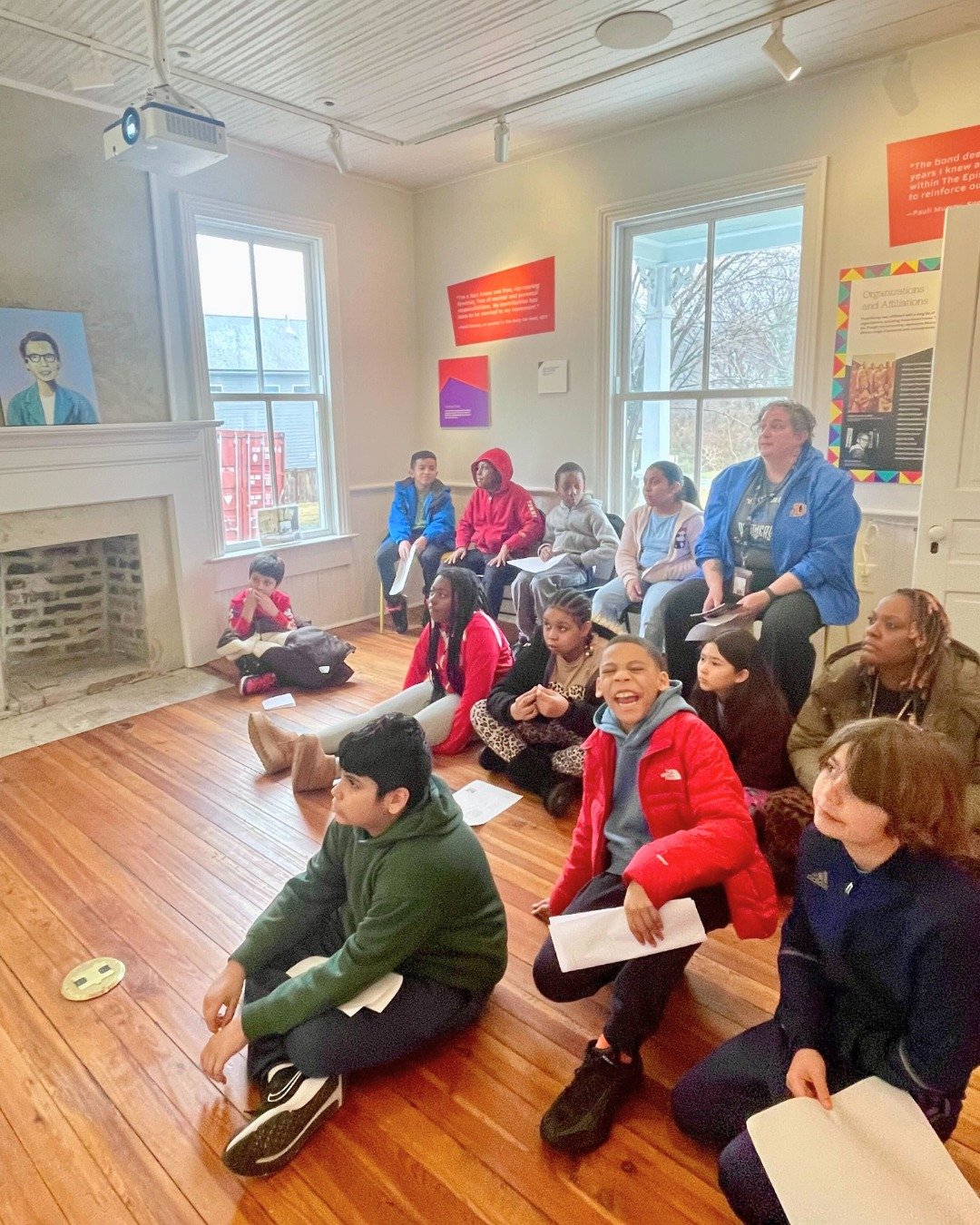
  • Help students and educators understand what Pauli’s activism means for us today, through field trips, classroom visits, and existing curriculum.

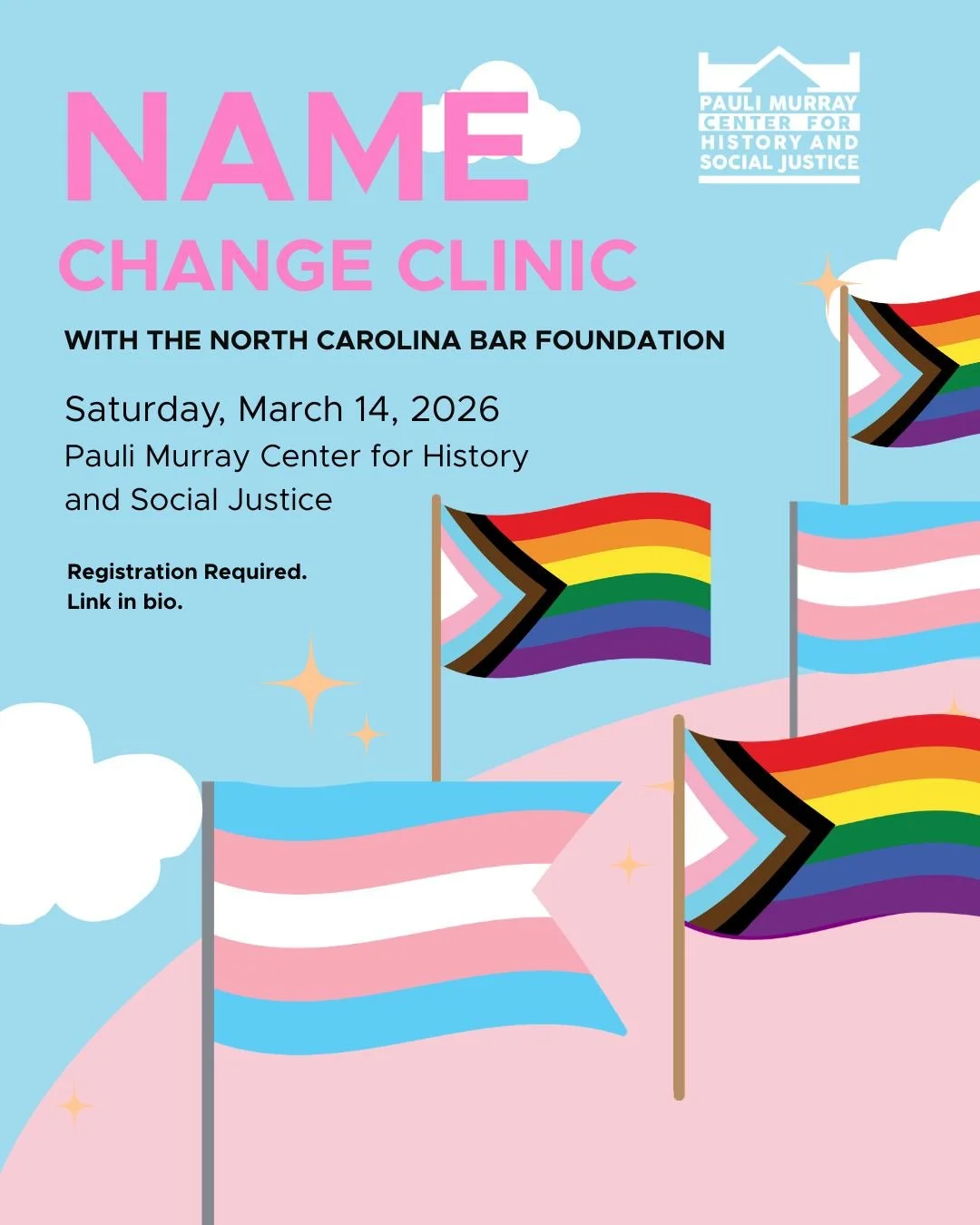
  • Serve members of our LGBTQIA+ community through quarterly name and gender marker change clinics. 

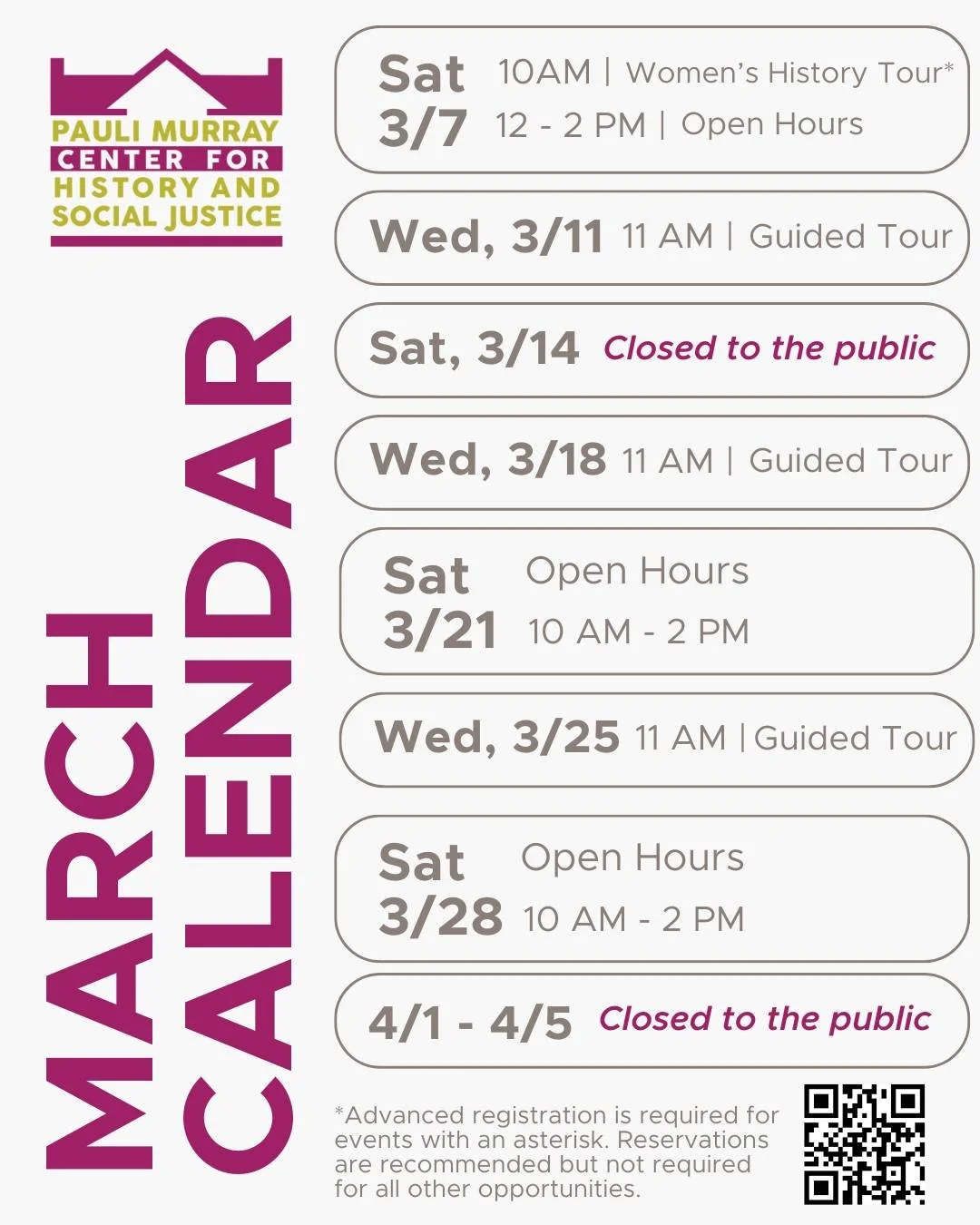
  • Connect folks to Pauli Murray’s activist legacy, through tours at the Center and lectures and events in our community.

  • Offer community programs rooted in activism, creativity, education, faith, and history.

As has been my practice of late, I’ll leave you with some action steps. It is not enough to be angry. I challenge you to transform your anger into action. Here’s some of what will help us: 

  • Advocate – Call or email your Congressperson. Express your condemnation and outrage that the Center’s Institute of Museum and Library Services grant was terminated. Your voice is impactful, and this is a quick action step to take. Remember Pauli: “One person plus one typewriter…” 

  • Show Up – Visit the Center. We take seriously our charge to activate Pauli’s life, work, and legacy for the benefit of all. Your presence on our site supports that work, fosters investment in the West End Neighborhood, and helps us to communicate our impact to funders, lawmakers, and other allies.

  • Support – Make a donation to the Center. Financial gifts of all sizes have an impact. This grant termination has left us with some gaps to fill, offered earlier in my note.  

Onward, 

Angela Thorpe Mason
Executive Director
Pauli Murray Center for History and Social Justice

April Newsletter Reflection: A Note from Our Executive Director

“We need not despair because we seem to fail or cannot see the fruition of our efforts on behalf of others. If we build with love and compassion, we can build with hope.” Excerpt from sermon titled "The Last Judgment" (1978)

Dear Friends,

Thank you for standing in solidarity with us in recent weeks as we spoke out against the federal government's censorship of Rev. Dr. Pauli Murray's life, work, and legacy. We appreciate each person who amplified our message, and who advocated alongside us. Alas, our work continues. I feel moved by Murray's well-known adage that "one person plus one typewriter constitutes a movement." I've offered some additional advocacy opportunities below: ways you can continue to support the Center, and ways you can align yourselves with the work of a few other groups I admire. For some of you, these advocacy opportunities might spark your activism. For others, they may support you in building upon work that you are already doing. Still, others of you may prefer to align with different work. More might be searching for your best point of entry. Whatever your position, I will continue to challenge you as I have since last fall. Times are hard; and they'll likely get harder. However, despair shall not swallow us whole. 

Angela Thorpe Mason
Executive Director 
Pauli Murray Center for History and Social Justice

March Newsletter Reflection: A Note from our Development Director

“At home, wherever I felt too confined or bottled up inside, a walk with Smokey eased the tension.” – Song in a Weary Throat

Navigating a steady drum beat of ‘unprecedented’ times is universally exhausting. But! Take heart, friends. A walk with a dog can work wonders. 

The Inaugural Pauli Murray Dog Walk isn’t just an opportunity to support a mission you agree with, a group of people you appreciate, or a historical figure that matters to you. It’s an opportunity to see yourself in the stream of history and its familiar waters. Just as Pauli was frustrated and catalyzed by injustice in the past, many of us feel similarly in the present. However, joy and relaxation are vital not only as coping mechanisms, but also as acts of defiance and tools for longevity. I hope you’ll take a page out of Pauli’s book (no pun intended) and ease tension with your family, friends and furry companions with us on 3/15. 

Thank you for continuing to champion Pauli Murray’s life and legacy. Wishing you and your family joy and ease,


Christen Ruiz
Development Director 
Pauli Murray Center for History and Social Justice

February Newsletter Reflection: A Note from our Executive Director

“However small and insignificant our contribution may seem in the face of vast human problems beyond our power to resolve…our tiny gift [can be multiplied] in ways we would not have dreamed possible.” –Rev. Dr. Pauli Murray, Sermon Given on August 5, 1984

Friends: 

I have spent the last couple of weeks listening to Pauli–through her oral history, writings, sermons, and speeches–seeking a specific message: that everything will be ok. Pauli, I’ve found, cannot offer us that reassurance. In fact, what has struck me during this exploration is the prophetic mirror they held up to today. As an elder, Rev. Murray made known the issues that characterized her reality: chaos; a deadly atmosphere that pervaded America; racism; sexism; social injustice and corruption; backlash against affirmative action and gender equality; controversy surrounding capital punishment, LGBTQ rights, abortion, “...and so on.” Pauli also rejected the instinct to fall into despair and hopelessness. 

Time and again, Pauli reminds us that the effort to build an America that so many of us envision is a cyclical experiment, characterized by cruelty, pain, defeat, wonder, victory, and joy. This is both the reward and consequence of building a just future for a society that is inherently “morally bankrupt.” However, Pauli also gives us strategies to meet the moment. Do you remember the note I wrote to you in November, on the eve of the election? In it, I offered you the precise and clear ways that Murray chose to implement justice work in their own life. Pauli wants us to be clear about what we can do, because she believes our gifts are transformative. Pauli also gives us clear guidance for how we can do our work to be most impactful: in community, leveraging interdependence; compassionately; and hopefully and patiently (for we may not see the fruits of our efforts). 

While this guidance may not make us feel better, it does offer remarkable clarity for how we can move through this era. 

Onward, 

Angela Thorpe Mason
Executive Director
Pauli Murray Center for History and Social Justice

P.S. – I gathered much of this guidance from a compilation of Rev. Murray’s sermons and speeches called To Speak a Defiant Word: Sermons and Speeches on Justice and Transformation. Pick up a copy from your local bookstore. Listening to Dr. Genna Rae McNeil’s 1976 oral history with Pauli Murray (little by little–it’s about 5 hours) has been transformative and grounding, as well. It can be accessed here. There’s nothing like hearing Pauli’s voice.

December Newsletter Reflection: A Note from our Executive Director

Dear friends,

2024 has been a year of abundance for the Pauli Murray Center. We began the year commemorating the release of the Pauli Murray Quarter. The milestones didn’t stop there: we completed the decade-long rehabilitation of Rev. Dr. Murray’s childhood home, celebrated the Center’s grand opening, secured funding to purchase Pauli Murray’s ancestral land, and so much more. Our growth most certainly aligns with the work that is ahead. We are well-positioned, now more than ever, to accept Murray’s charge to march endlessly towards justice. We’ll fulfill this duty by offering programs that connect Murray’s work and legacy to today’s most pressing justice issues in the U.S. South; by integrating social justice- and equity-centered teaching pedagogies in NC classrooms, shaping the next generation of “firebrands”; and by continuing to cultivate Murray’s childhood home and ancestral land as places where justice-oriented work can be incubated and nurtured. I hope you’ll continue to walk alongside us as this work takes shape. 

Onward, 

Angela M. Mason
Executive Director 
Pauli Murray Center for History and Social Justice

November Newsletter Reflection: A Note from our Executive Director

Dear friends,

I'm writing this note to you on Nov. 4th, on the eve of what will be yet another consequential Election Day. When you read this, we will likely have begun navigating the headwinds of the election results and ultimate election outcome. Rev. Dr. Pauli Murray envisioned, for her lifetime, an America that we continue to aspire towards. A nation where each person lives a free, dignified life, without concern for their rights or shrinking any part of their identity. As a 30-something, Pauli Murray offered strategies for how they sought to advocate for this America: "...by persuasion, by spiritual resistance, by the power of [their] pen, and by inviting violence upon [their] own body...by positive and embracing methods." As you consider the strategies you've employed to help us achieve the America we are still striving towards, remember that Pauli Murray reminds us that freedom is our inheritance. As we navigate this election's outcome, we must also take up Murray's charge that comes as a result of that inheritance: we are heirs to the "...tradition of an endless march toward freedom..." Though they may feel so, these times are not unprecedented. Rev. Dr. Murray lived in times where democracy hung in the balance. So did her parents, grandparents, and great grandparents. Steward your inheritance with care. Our work does not end after November 5th. 

Onward, 

Angela M. Mason
Executive Director 
Pauli Murray Center for History and Social Justice

Rev. Dr. Pauli Murray on 11th American Women’s Quarter

Rev. Dr. Pauli Murray on 11th American Women’s Quarter

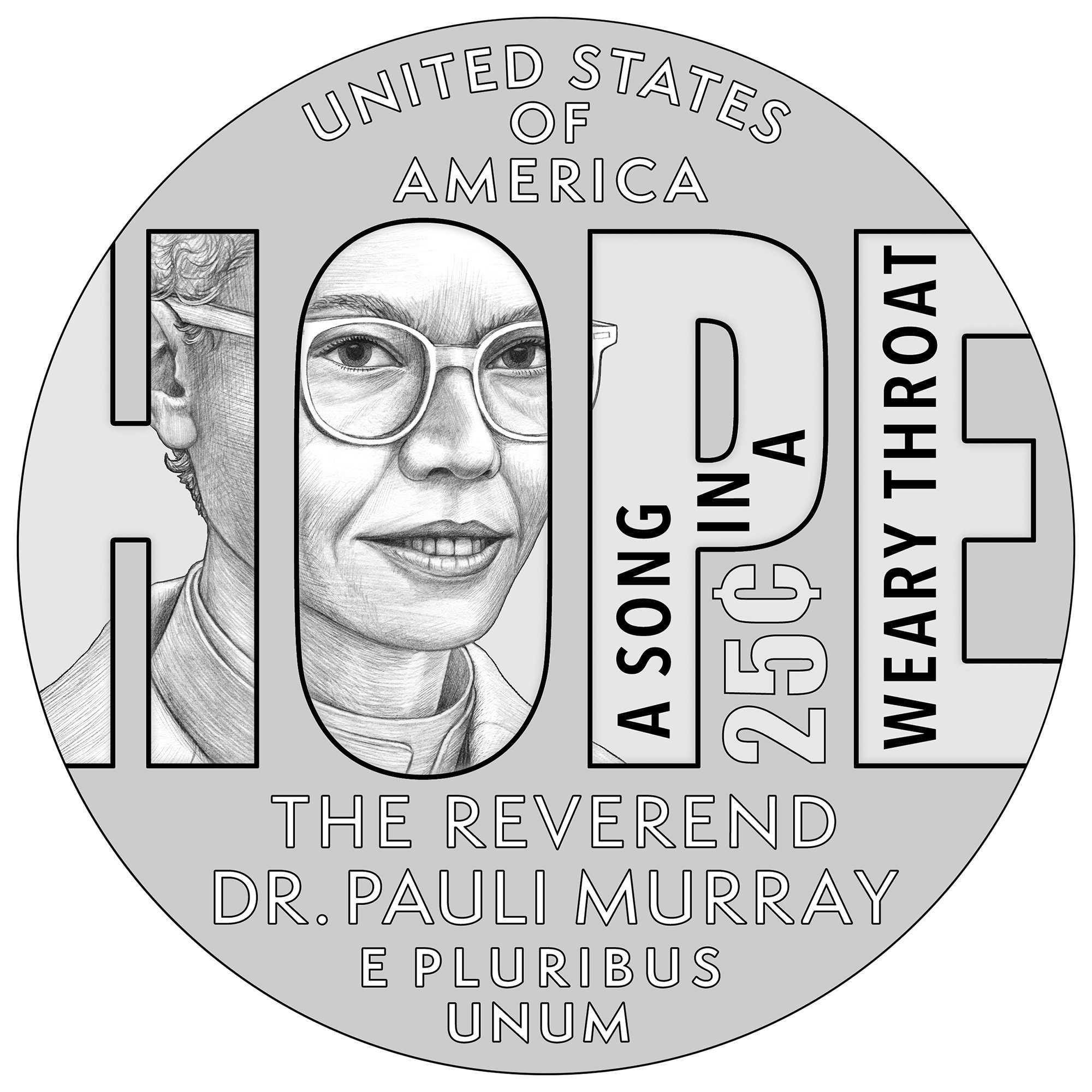
DURHAM, N.C.– The Pauli Murray Center for History and Social Justice eagerly awaits the U.S. Mint’s Rev. Dr. Pauli Murray quarter. To be released in 2024, the 11th quarter in the  American Women's Quarter Program will celebrate Rev. Dr. Murray’s life as an activist, writer, lawyer, and Episcopal priest. Rev. Dr. Murray will join other recipients like writer Maya Angelou, astronaut  Dr. Sally Ride and First Lady Eleanor Roosevelt. While the face of the quarter will continue to depict George Washington’s likeness, the reverse (tail) depicts Rev. Dr. Murray’s eyeglass-framed face within the shape of the word “HOPE”. The word “HOPE” honors Rev. Dr. Murray’s belief that significant societal reforms were possible when rooted in hope.  A line from her poem “Dark Testament,” characterizes hope as “A SONG IN A WEARY THROAT,” an inscription in the design.

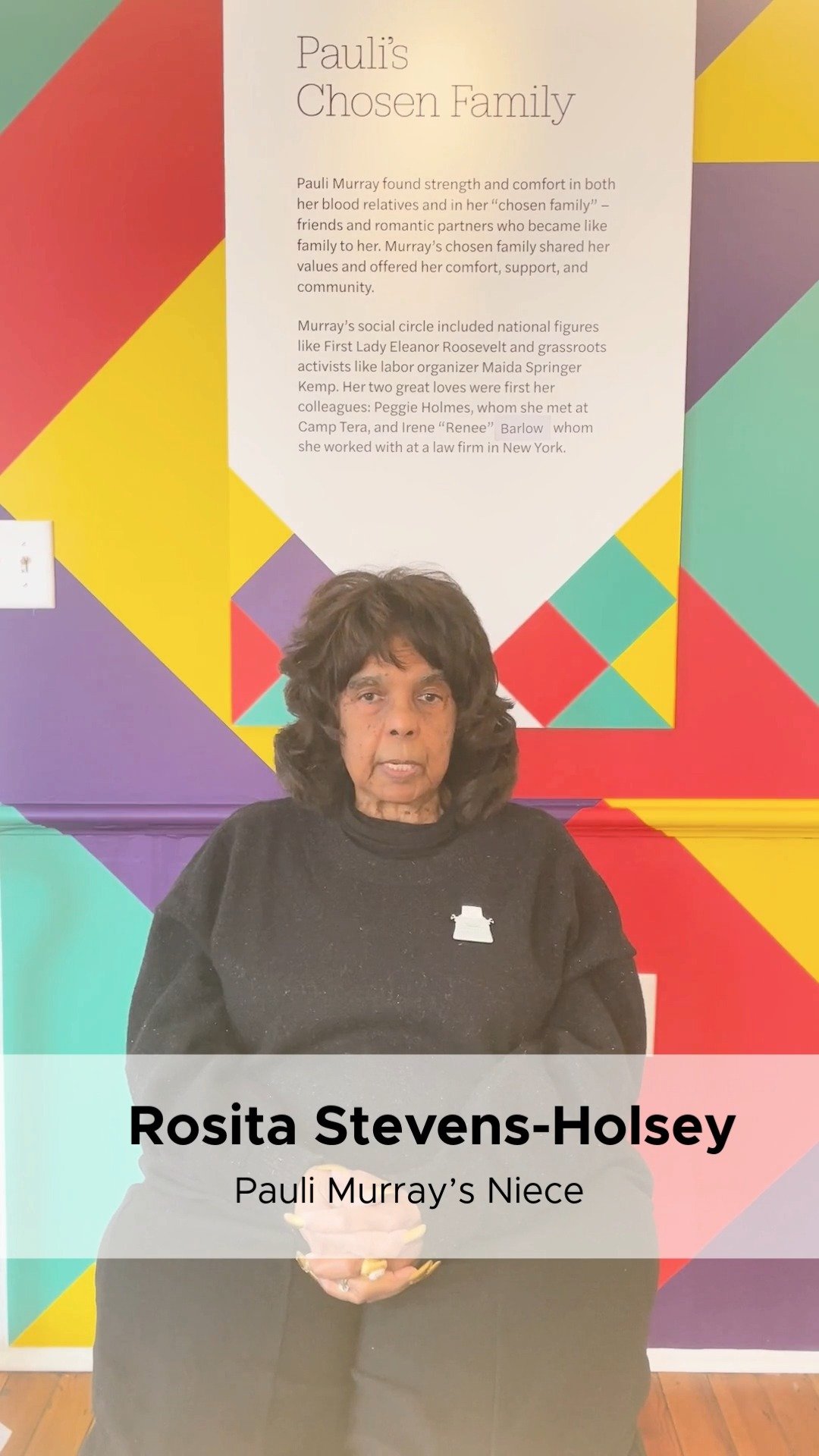
This significant recognition of Rev. Dr. Murray’s life and legacy has been championed by advocates and activists around the world, including her niece, and Pauli Murray Center board member, Rosita Stevens-Holsey. “The Rev. Dr. Pauli Murray's quarter design is certainly one of the most unique of all of those in the American Women Quarters Program,” she said. “When I see my aunt's face looking out through the letters of the word "hope", it brings to mind that she never lost hope in a society and world that needed to change to embrace the rights of all humans.  Her selection as one of the honorees is validation and a testament to more than 50 years of achievements in social justice, women's rights, civil rights, and human rights.”

As we approach the 2024 quarter release, the Center is excited to celebrate this milestone in company with our supporters and friends in North Carolina. May Rev. Dr. Murray’s work and life keep modeling progress, justice, and community.

About the Pauli Murray Center

The Pauli Murray Center for History and Social Justice engages diverse communities to lift up the life and legacy of activist, legal scholar, feminist, poet, Episcopal priest, and LGBTQ+ community member, the Rev. Dr. Pauli Murray, in order to address enduring inequities and injustice in our nation. The Pauli Murray Center is a National Historic Landmark site anchored by Pauli Murray’s childhood home in Durham, North Carolina. The home stands on its original site, a one-acre plot, in the historically Black working-class West End neighborhood. PMC is quickly becoming a fully operational, visitor-ready site. Over the next few years, we will completely rehabilitate and create an accessible historic home and education center; build on our robust calendar of workshops, both on the ground and virtually; host community dialogues and invitations to action; and lead creative arts programming.

Pauli Murray to Be Featured on U.S. Quarters

The Pauli Murray Center is thrilled to share that Pauli Murray, the pioneering activist, scholar, poet, and priest, will be featured on a series of U.S. quarters beginning in 2024 as part of the U.S. Mint’s American Women Quarters Program. The program, which began in 2022, celebrates figures in U.S. history who have made outstanding contributions to American civil rights, history, art and culture, science, and more. Murray will be honored alongside Patsy Takemoto Mink, Dr. Mary Edwards Walker, Zitkala-Ša, and Celia Cruz. The designs will be released in mid-2023. 

This recognition presents an opportunity to explore Pauli’s own writing, and more recent scholarship, about their relationship to gender and womanhood. We do not and can never know Murray’s gender identity – Pauli Murray described themself as a “he/she personality,” requested hormone therapy, and also self-described as a woman. The Pauli Murray Center currently uses she/her and they/them pronouns when discussing Dr. Murray’s life. We encourage those interested to explore the many resources about Pauli Murray, gender, and pronouns, including Dolores Chandler’s Pauli Murray: Black Revolutionary and Simon D. Elin Fisher’s Pauli Murray's Peter Panic: Perspectives from the Margins of Gender and Race in Jim Crow America

The Pauli Murray Center hopes that this unique honor will encourage those who might come across a Pauli Murray quarter to learn about their vision for a just world – including exploring Murray’s legal impact, activism, scholarly and poetic writing, and her legacy in Durham and beyond.

About the Pauli Murray Center

The Pauli Murray Center for History and Social Justice engages diverse communities to lift up the life and legacy of Black activist, legal scholar, feminist, poet, Episcopal priest, and LGBTQ+ community member, the Rev. Dr. Pauli Murray, in order to address enduring inequities and injustice in our nation. 

The Pauli Murray Center is a National Historic Landmark site anchored by Pauli Murray’s childhood home in Durham, North Carolina. The home stands on its original site, a one-acre plot, in the historically Black working class West End neighborhood. We are becoming a fully operational, visitor-ready site. Over the next few years, we will completely rehabilitate and create an accessible historic home and education center; build on our robust calendar of workshops, both on the ground and virtually; host community dialogues and invitations to action; and lead creative arts programming.